


Mastering How to Charge the Nissan Ariya
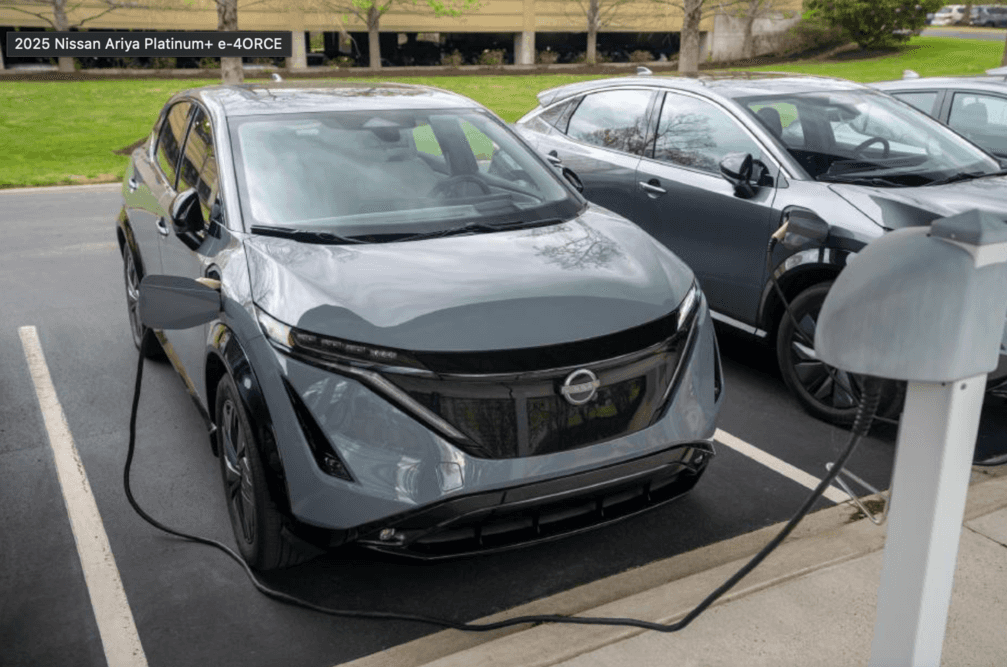
Photo Source/Copyright: NISSAN USA Newsroom
Are you wondering how exactly you power up the Nissan Ariya? Charging this innovative vehicle is remarkably simple, as the Ariya is an all-electric crossover that pairs everyday practicality with the quiet, responsive drive of an electric vehicle (EV). It offers two battery sizes and flexible charging options, so you can power up at home or top off while running errands or traveling.
Charging the Ariya is straightforward once you know your options. This guide walks through the charging levels, where to find the port, and the simple steps to plug in with confidence. Whether the Ariya is your first EV or you’re simply new to this model, the routine quickly becomes second nature.
Charging Levels Explained
The Ariya works with three charging levels, each suited to a different situation. Your choice mostly comes down to where you are and how quickly you need the battery replenished.
- Level 1 (120 V): a standard household outlet; best for overnight top-ups or emergencies, adding only a few miles of range per hour.
- Level 2 (240 V): home or public AC charging; a full charge in roughly 10.5 hours for the smaller battery to about 14 hours for the larger one, limited by the onboard charger.
- Level 3 (DC fast, ~130 kW): public quick chargers that take the battery from 10 to 80 percent in about 35 to 40 minutes, depending on pack size.
Battery Sizes and Range
The Ariya is available with either a 63-kilowatt-hour (kWh) or an 87-kilowatt-hour (kWh) battery. The larger pack delivers a longer driving range on a full charge, while the smaller pack reaches full charge faster. Charging duration scales with battery capacity, so knowing which pack your Ariya has helps you plan every session, whether you’re refueling overnight or topping off mid-trip. If most of your driving is local, either pack will comfortably cover daily needs on a single overnight charge.
Locating the Charge Port
Before you plug in, find the charge port. On the Ariya, it sits on the front flank, just ahead of the passenger-side front wheel, and it uses a CCS connector. Keep that position in mind as you pull up to a station so the cable reaches comfortably without stretching.
Step-by-Step Charging
Once you have located a charger, the process takes only a few steps:
- Power the vehicle completely off; the Ariya will not charge while it’s drawing power.
- Unlock the doors, then press the charge port lid to release it and remove the cap.
- Seat the connector over the port, pressing the top edge first, then push down until it locks into place.
- When charging finishes, disconnect the connector, replace the cap, and stow the cable.
That’s all it takes. The Ariya begins drawing power as soon as the connector locks in, and it stops automatically once the battery is full, so there’s no need to watch it closely.
Monitoring Your Charge
You don’t have to stand by the car while it charges. The MyNISSAN app shows your battery percentage, plug-in status, and estimated time to full charge, so that you can track progress from anywhere. You can also start or stop a session remotely and set a charging schedule, which makes it easy to charge during off-peak hours and return to a ready vehicle.
Home vs. Public Charging Tips
Most drivers do the bulk of their charging at home. A 240-volt Level 2 setup replenishes the battery overnight and keeps the Ariya ready each morning, and charging to around 80 percent for daily driving helps preserve long-term battery health.
For longer drives, public DC fast chargers add substantial range in well under an hour, and aiming for the 10-to-80-percent window keeps sessions quick. With an NACS adapter, the Ariya can also use Tesla Superchargers, expanding your charging options on the road alongside the broader public charging network.
Experience the Nissan Ariya
We proudly invite you to explore the Ariya across our inventory. Learn more about our options and schedule a professional test drive today. Our exceptional team is fully ready to welcome you into the future of driving.
Frequently Asked Questions
Q: What charging levels does the Nissan Ariya support?
A: The Ariya supports Level 1 (120 volts), Level 2 (240 volts), and Level 3 DC fast charging, giving you options both at home and on the road.
Q: How long does it take to charge fully?
A: On a Level 2 charger, a full charge takes roughly 10.5 hours for the smaller battery and about 14 hours for the larger one. A DC fast charger reaches 80 percent in about 35-40 minutes.
Q: Where is the charge port located?
A: The charge port is on the front flank, just ahead of the passenger-side front wheel.
Q: Can I monitor charging remotely?
A: Yes. The MyNISSAN app lets you check status, start or stop charging, and schedule sessions from your phone.
More From Nissan of Fort Pierce
What To Know: Nissan Kicks S Trim
Photo Source/Copyright: [INSERT] Most entry trims feel like a starting point you’re supposed to climb away from. This one doesn’t, at least not anymore. The Nissan Kicks S trim picked up the big 12.3-inch touchscreen that used to live on pricier versions, reshuffling the math on Nissan’s smallest crossover. Same engine as the top…
Top Reasons the Nissan Altima Interior Shines
Photo Source/Copyright: NISSAN USA Most midsize sedan shoppers walk in asking about fuel economy. Then they sit down. That’s usually when the conversation shifts, since the Nissan Altima interior tends to make its own case before anyone opens a spec sheet. Nissan trimmed the lineup to two versions, SV and SR, making shopping simpler….
Choosing the Best Nissan SUV Models by Size
Photo Source/Copyright: NISSAN USA Sorting the Nissan SUV lineup by size is the fastest way to turn a confusing showroom floor into a short, manageable list. Exterior dimensions and seat counts eliminate mismatched contenders in thirty seconds, saving you from spending hours analyzing feature sheets. Here’s how Nissan’s five distinct models line up…